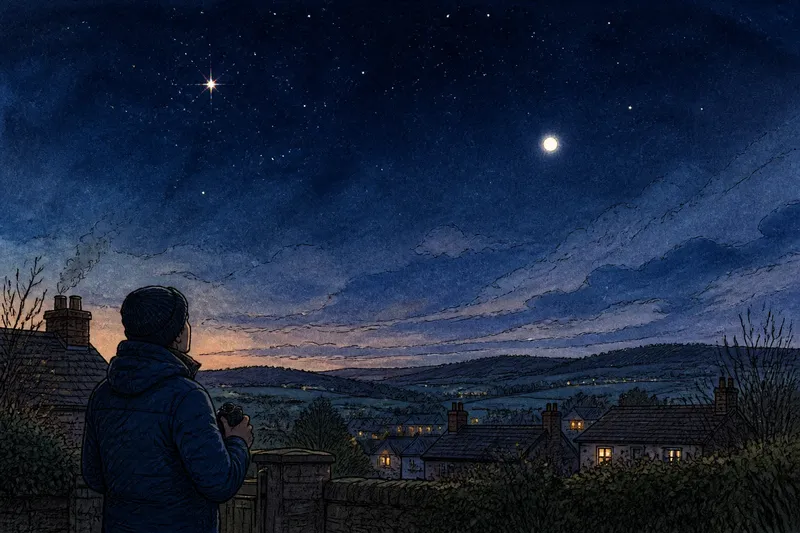
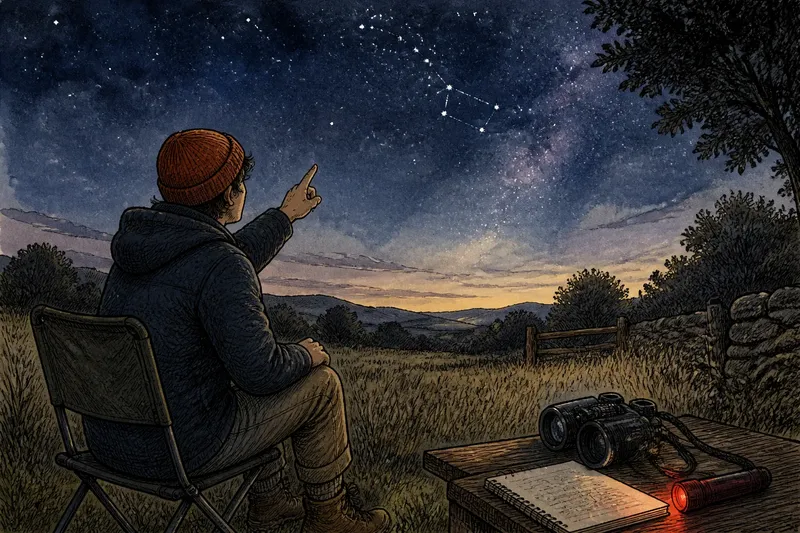
A One-Hour Stargazing Evening in Late Autumn
Plan a one-hour stargazing evening in late autumn with a warm-up, a simple naked-eye scan and quiet pauses that make the dark easier to enjoy.
The common mistake with a one-hour stargazing evening in late autumn is spending the hour trying to see everything. It costs you warmth, attention and the pleasure of noticing what is actually above you. A better plan gives the evening a gentle shape: arrive prepared, let your eyes settle, make a short naked-eye scan, then leave room to pause.
Choose a simple place and a modest aim
Pick a spot you can reach without rushing: a garden, a quiet park with permitted access, or a familiar field edge. Look for an open view of the sky and a place to sit or stand away from direct lamps. A perfectly dark site is not essential for a relaxed session; a safe, convenient place you can use comfortably is often the better choice.
Before setting out, check the cloud forecast and the time of sunset. A clear patch of sky matters more than a long list of targets. If the forecast is uncertain, choose a location where you can step indoors or head home easily. Tell someone where you are going if you will be alone, and use a torch carefully on paths and uneven ground.
Give the hour one modest aim. You might want to recognise a few bright stars, notice how the sky changes as dusk deepens, or simply spend time looking upwards. Avoid making a particular constellation or planet the evening’s sole measure of success: clouds, trees and the season’s changing sky can all shape what is visible.
Pack for warmth before packing for the sky
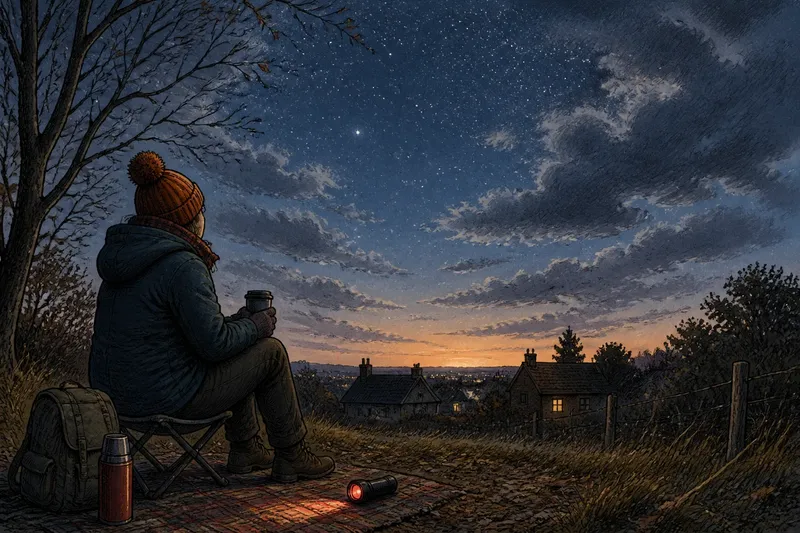
Late autumn comfort is less about carrying specialist equipment than about staying warm while still. Add layers you can adjust, including a warm outer coat, hat and gloves. Wear footwear suited to damp grass or muddy paths. A small seat or folded mat keeps you off cold ground; a flask of a warm drink can make the pause feel inviting.
Take a dimmable red torch if you have one, or use a torch sparingly and point it down when moving. Bring a phone only for practical needs or a sky map you have already set to a low-brightness night mode. A printed map is an easy alternative. Put these things somewhere you can reach without rummaging through a bright bag.
Skip elaborate gear. A telescope, multiple apps and a large set of reference cards are not worth the effort for this particular hour. They can turn a calm visit into a series of adjustments. The central activity is looking with the naked eye, not managing equipment.
Start with a warm-up and a view of the conditions
For the first part of your hour, settle in rather than immediately searching for stars. Find a sheltered spot, adjust your layers and let your breathing slow after the walk. Keep your gaze away from nearby lights where possible. Notice whether clouds are moving, whether haze softens the brighter stars, and which part of the sky is clearest.
Do not expect your eyes to become fully dark-adapted on command. Simply give them time away from bright screens and lamps. If you need to check a map, make the check brief, then look back up. Late-autumn air can make fingers clumsy; warm them before handling a phone or trying to trace a shape.
Use this opening to decide what the sky is offering tonight. If cloud covers much of it, choose one open patch and watch it rather than repeatedly scanning the whole horizon. If the sky is broadly clear, begin with the brightest stars you can recognise. Either way, the plan remains useful without requiring a perfect night.
Make a short naked-eye scan from horizon to overhead
When you are comfortable, scan slowly. Start with the clearest stretch of horizon, then lift your gaze towards the higher sky. Let your eyes rest on one area for a few moments before moving on. This is not a contest to identify every point of light; it is a way to notice the sky as a connected scene.
Pick out the brightest stars first. Compare their colour and apparent brightness without assuming every bright point is a star. A planet, if one is visible, may look steadier than nearby stars, but you need not identify it to enjoy the view. A sky map can help you check a name after you have made your own first impression.
Now look for broad patterns rather than drawing lines between every star. Notice a distinctive curve, a compact group, or the way several bright points sit relative to one another. You can use familiar landmarks—such as the direction of a nearby roofline or a gap between trees—to remember where you looked. Avoid staring towards a streetlamp; shift your position or turn your body so the light is behind you.
Say you arrive to find a clear southern opening and clouds over the rest of the garden. Choose two bright stars in that opening, notice their spacing, then watch the cloud edge drift past while you stay warm. The expected result is not a completed chart, but a small, memorable sense of where those stars sit in the available sky.
Pause instead of extending the search
After the scan, lower your gaze and take a proper pause. Sip your drink, listen to the surroundings and notice the temperature. Then look up again without a new target in mind. The second look often feels different because you are less intent on naming things and more aware of the dark, the cloud texture and the gaps between bright points.
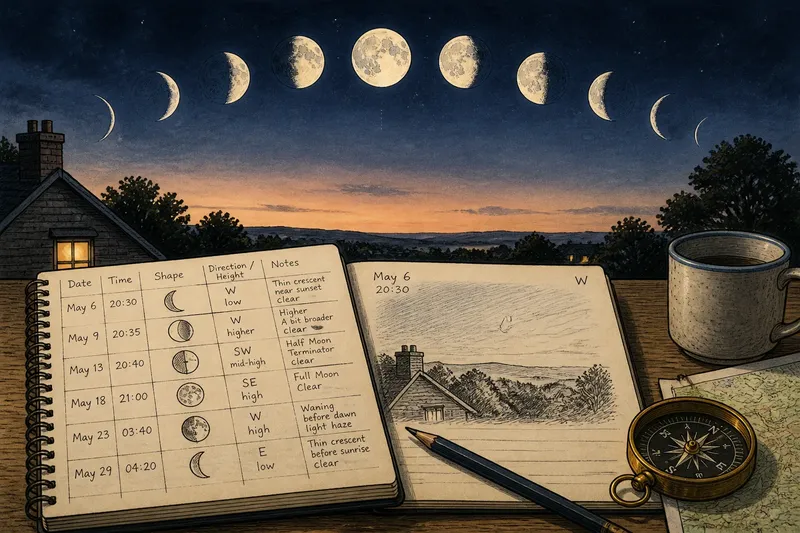
If you want a small activity, compare one part of the sky with another. Which area has more visible stars? Does a faint group appear more clearly when you look slightly to one side of it? These are observations, not tests. There is no need to record them unless a note would help you remember the evening.
Keep the pause genuinely restful. Do not spend it scrolling through forecasts or searching for a new list of objects. If the cold starts to distract you, add a layer or move. Comfort is part of the observing plan, not a reward you earn by staying out longer.
Close the hour while the evening still feels easy
As the hour draws on, take one last look at the clearest part of the sky. Choose a single thing to remember: a bright star low above a roof, the changing edge of a cloud, or the contrast between a familiar pattern and a darker patch. You do not have to know its name. A detail you noticed for yourself is a useful ending.
Pack away calmly and use your torch for the walk back. Check that you have your phone, gloves and any flask, then leave the site as you found it. If the sky has clouded over, the evening can still have served its purpose: you have learned how the place feels in the cold and what conditions make a return worthwhile.
How should you adapt the evening to the weather?
What if clouds cover most of the sky?
Focus on the clearest opening rather than waiting for the whole sky to clear. If cloud is thick throughout or conditions make the outing uncomfortable, head home and try another evening.
Should you go out when the Moon is visible?
Yes, if you are happy to include it as part of the view. Bright moonlight can make fainter stars harder to see, so keep your aim modest and enjoy the contrast between the Moon and the darker sky around it.
Do you need to know the constellations first?
No. Begin with bright points and simple arrangements, then check a map if curiosity takes you there. Learning one familiar pattern over several evenings is more manageable than trying to memorise the whole sky at once.
What should you do if you become too cold?
Add a layer, move to shelter or end the session. The point of a one-hour stargazing evening in late autumn is to make looking up comfortable enough to enjoy, not to endure the cold for the sake of a plan.
Let a small observation be enough
A relaxed session does not need a discovery or a photograph to feel complete. Give yourself a warm start, a brief scan and a quiet pause, then go home before the outing becomes a test of patience. On another evening, the same simple routine can help you notice a different patch of sky—and that is plenty to carry forward.